
Europe needs robust accounting for Carbon Dioxide Removals
The European Commission’s communication on the European Green Deal and proposal for European Climate Law for climate neutrality by 2050 indicate that carbon dioxide removals will be needed to achieve the objective of net-zero GHG emissions by 2050. This report defines carbon dioxide removal, based on the four principles presented in the previous ZEP report on ‘Europe needs a definition of carbon dioxide removal’.The definition and the criteria proposed in this report will hopefully support European and national policymakers to create and implement a transparent and robust framework for CDR in Europe:
Executive Summary
European governments have begun to respond by formulating long-term targets aiming to halt human impacts on the climate. In Europe alone, Austria (2040), Denmark, Finland (2035), France, Germany, Iceland (2040), Ireland, the Netherlands, Norway (2030), Portugal, Slovakia, Sweden (2045), Switzerland, the United Kingdom, and the European Union as a whole, are expected to adopt or have already adopted a target to reach ‘net-zero’ GHG emissions by 2050 at the latest.
The European Commission’s communication on the European Green Deal and proposal for European Climate Law for climate neutrality by 2050 indicate that carbon dioxide removals will be needed to achieve the objective of net-zero GHG emissions by 2050, defined as the ‘balance between anthropogenic economy-wide emissions and removals, through natural and technological solutions, of greenhouse gases domestically within the Union at the latest by 2050’.
Although there is no official or widely accepted definition of what ‘Carbon Dioxide Removal’ technically means, the concept of CDR entails taking CO2 out of the atmosphere, where it contributes to climate change, and storing it in a manner that is intended to be permanent. The aim is to reduce the concentration of CO2 which is in the atmosphere. This can generally be achieved through both natural and technological means.
Summary
This report provides a definition of carbon dioxide removal, based on the four principles presented in the previous ZEP report on ‘Europe needs a definition of carbon dioxide removal’, which defines a screening process to identify whether CCS and CCU projects may lead to CDR and outlines the factors that need to be considered when assessing a project’s potential for CDR.
When assessing the potential of a process to lead to CDR, four principles should be considered:
- Carbon dioxide is physically removed from the atmosphere.
- The removed carbon dioxide is stored out of the atmosphere in a manner intended to be permanent.
- Upstream and downstream greenhouse gas emissions, associated with the removal and storage process, are comprehensively estimated and included in the emission balance.
- The total quantity of atmospheric carbon dioxide removed and permanently stored is greater than the total quantity of carbon dioxide equivalent emitted to the atmosphere.
The report finds that a failure to meet principles 1 and 2 would prevent a process from qualifying as carbon dioxide removals. In this sense, the report argues that principles 1 and 2 should serve as screening criteria. Additionally, a cautious and comprehensive verification of principle 3 is critical to make sure that all associated emissions are included in the life-cycle analysis and calls for a case-by-case evaluation.
Through a series of graphic illustrations, the report describes and analyses processes that can lead to CDR. Building on the technical expertise represented in ZEP, the report focuses on CCS- enabled technological solutions, for which a thorough assessment and description of each principle is provided. The report acknowledges the potential for CDR of nature-based solutions, noting that these require active management and are more susceptible to reversals, due to natural events caused by climate change. However, the assessment of value-chain emissions and volumes of CO2 removed from the atmosphere is beyond the scope of the report. Finally, the report also includes some illustrations of processes which do not qualify as CDR, because they fail to meet principles 1 and 2. No further assessment is required for these processes.
The development of European, cross-border CO2 infrastructure – where the transport of CO2 can be enabled by all modalities of CO2 transport – is an essential prerequisite for CDR at a substantial scale. The European Union benefits from a world class storage region – the North Sea basin, which has tens of billions of tonnes (Gt) of CO2 storage capacity and has safely stored CO2 since 1996. The recently- launched Norwegian CCS project – Longship – and the positive developments in the Netherlands, Belgium, the UK and Ireland – with CEF funding being awarded to PORTHOS, Athos, Acorn Sapling and ERVIA, are at the backbone of the development of European cross-border CO2 infrastructure, to which CO2 emitters in industrial hubs and power plants can connect.
The report also includes a list of upcoming European projects that meet principles 1 and 2 and have therefore the potential to qualify as carbon dioxide removal. A robust and transparent carbon accounting will be needed when evaluating principles 3 and 4.
ZEP recommendations
In 2020, the European Commission has announced the intention to revise existing pieces of legislation such as the EU ETS directive, the Effort Sharing Regulation, the REDII by June 2021, and update them in light of climate neutrality by 2050, as well as support the Commission’s work related to the New Circular Economy Action Plan.
The definition and the criteria proposed in this report will hopefully support European and national policymakers to create and implement a transparent and robust framework for CDR in Europe:
- A consistent and coherent policy framework should be put in place to incentivise carbon dioxide removals. Such a framework should be based on accurate and thorough carbon accounting.
- Climate change mitigation must be pursued as a matter of priority. CCS can be a real driver for the decarbonisation of energy- intensive industries and the energy sector, and it can also enable carbon dioxide removals.
- The transfer of captured CO2 to a storage site by ship, truck, train or pipeline should be included in the Monitoring and Reporting Regulation Article 49 (a) (ii) or (iii). This calls for a consequent revision of all the pieces of legislation connected to the EU ETS, such as the TEN-E regulation (article 4 (e), annex I (12) and Annex II (4)). ZEP notes that the European Taxonomy for Sustainable Finance allows CO2 transportation by all modalities – pipeline, ship, barge, truck, and train. Harmonisation and consistency will be needed.
- There should be an acknowledgement that any industrial or energy installation capturing CO2 from atmospheric or biogenic sources, for storage in a manner intended to be permanent, has the potential to realise carbon dioxide removal. The potential should be verified through robust life-cycle analysis and carbon dioxide accounting to confirm that removal of CO2 is indeed happening. Currently, there are no incentives to capture and permanently store biogenic CO2 emissions, despite the clear climate benefit of doing so.
- Some applications of CCU where CO2 is captured and stored in a manner intended to be permanent, should be included in a revised EU ETS.
Key messages
- Reaching climate neutrality by 2050 will only be possible if mitigation efforts are supplemented with the active removal of CO2 from the atmosphere.
- Once removed, CO2 must be properly accounted for, kept away from the atmosphere and stored in a manner that is intended to be permanent.
- CCS is a safe, scientifically proven and cost-efficient technology which can enable CDR through capture and geological storage of CO2 from biogenic sources and direct air capture and storage. The development of Europe-wide CO2 transport and storage infrastructure is needed to deliver CDR at the scale that will be required for Europe to achieve climate neutrality.
- In a CCS and CCU context, Bio-CCS and Waste-to-Energy with CCS will play an important role for the decarbonisation of energy-intensive industries and the management of residual waste in cities, providing a real and sustainable alternative when recycling and reuse have already taken place.
Introduction
Currently, most of the world’s anthropogenic carbon dioxide (CO2) emissions come from carbon which has been geologically stored for millions of years. Since the Industrial Revolution, humans have been extracting carbon at an increasing industrial scale from these ancient reserves, to provide energy and raw materials for our modern society. As a by-product, CO2 is emitted into the atmosphere and has accumulated so that CO2 concentrations have increased from pre-industrial levels of 290 ppm, via 354ppm in 1990, to today’s 411ppm. Concurrently, the average global temperature has increased by approximately 1°C3. Carbon dioxide is the primary greenhouse gas (GHG) responsible for trapping outgoing planetary heat, thus increasing global temperatures.
To cope with the climate crisis, the European Union has announced a legally-binding objective of reaching climate neutrality – defined as net-zero greenhouse gas emissions – by 2050. To this end, all efforts to limit emissions of CO2 and other GHGs must be supplemented with Carbon Dioxide Removal (CDR) from the atmosphere. A key point is that achieving net-zero GHG emissions requires a net balance between emissions into and removals from the atmosphere. CO2 has some particularities: it is one of the GHGs with the highest concentration in the atmosphere, and technologies already exist to actively remove it from the atmosphere.
All pathways analysed in the IPCC’s Special Report on 1.5°C require negative emissions to some extent to balance out residual, hard-to-abate emissions.
All efforts to mitigate the worst impacts of climate change must therewith look at both significantly decreasing CO2 and other GHG emissions as a priority, while also increasing physical removal of CO2 from the atmosphere as a supplementary measure.
Thorough carbon accounting is crucial to ensure that carbon dioxide is being removed and kept away from the atmosphere. When assessing the potential for CDR, it is important to put in place measures to monitor and verify that CO2 is actively removed and prevented from re- entering the atmosphere. This point is further described in the report. CDR requires carbon dioxide to be physically removed from the atmosphere and stored out of the atmosphere in a manner intended to be permanent.
CO2 transport and storage infrastructure is an enabler of large-scale emissions reductions and carbon dioxide removal. Timely development of European CO2 transport and storage infrastructure is a strategic choice in support of the EU’s climate goals. Once CO2 infrastructure is in place, industrial emitters will be able to dispose of their captured CO2 so that it is safely transported and stored in a manner intended to be permanent, typically in geological formations. Such infrastructure will thereby enable the EU to kickstart large-scale decarbonisation of industries, while unlocking the potential for CDR.
CCS enables CDR through capture and geological storage of CO2 from biogenic sources and through direct air capture and storage. Biomass with CCS, direct air capture with CCS and Waste to Energy (WtE) with CCS can support the decarbonisation of those sectors of the European economy which are more energy-intensive or where direct electrification will be too costly.
The paper builds on the expertise within the ZEP community. For this reason, the report focuses on the engineering of CCS-enabled solutions for CDR. This report recognises the potential for CDR through the accumulation of carbon in the biosphere (e.g. reforestation or adding biochar to the soil), yet it does not elaborate on this topic. Furthermore, the paper does not go in-depth on natural carbon cycles, such as natural mineralisation processes and natural CO2 release processes.
This paper:
- Defines and explains what carbon dioxide removal is.
- Defines a screening process to identify whether CCS and CCU projects may qualify as CDR projects.
- Outlines how to set system boundaries around a process to identify if it truly qualifies as CDR.
- Highlights the need for robust carbon accounting and governance frameworks.
What is Carbon Dioxide Removal/Negative Emissions?
The terms Greenhouse Gas Removal (GGR), Negative Emission Technology (NET) and Carbon Negative have been used to describe the same or similar concepts. These terms are somewhat interchangeable.
Greenhouse Gas Removal refers to the removal of all greenhouse gases. However, the effect of CO2 and other greenhouse gases on the climate is not The terms Greenhouse Gas Removal (GGR), Negative Emission Technology (NET) and Carbon Negative have been used to describe the same or similar concepts. These terms are somewhat interchangeable.
Greenhouse Gas Removal refers to the removal of all greenhouse gases. However, the effect of CO2 and other greenhouse gases on the climate is not entirely ‘like-for-like’ ,and the nature of their accumulation in the atmosphere is also quite different. Furthermore, technologies exist to remove CO2 in a manner intended to be permanent, whereas technologies for removing other GHGs are less clear. To avoid confusion and possible loopholes, it is specified that this report focuses on the removal of CO2.
Negative Emissions Technologies refer to the concept of removals, as the opposite of increasing emissions, but this does not explicitly refer to CO2 or any other GHGs.
For clarity, this report only uses the term Carbon Dioxide Removal.
What does Net-Zero mean?
The target of the Paris Agreement, made effective in 2016, is to “achieve a balance between anthropogenic emissions by sources and removals by sinks of greenhouse gases in the second half of this century”. “Net-zero” is the term which has come to represent this balance between emissions and removals for the complete (cradle-to-grave) system. It is important to note that reducing emissions remains the absolute priority for the mitigation of climate change. Any entity aiming for ‘net-zero’ emissions generally assumes some degree of Carbon Dioxide Removal.
What does Carbon Dioxide Removal mean?
There is no official or widely accepted definition of what ‘Carbon Dioxide Removal’ technically means. Conceptually, CDR entails taking CO2 out of the atmosphere, where it contributes to climate change, and putting it someplace where it will not affect the climate for a long time. The aim is to reduce the concentration of CO2 that is in the atmosphere, and therewith reduce the trapping of CO2, which can be removed either directly from the atmosphere or via photosynthesis, which converts CO2 and H2O to biomass. I.e. capturing CO2 from biogenic sources is an indirect capture of atmospheric CO2 and outgoing planetary heat. This can generally be achieved through both natural and technological means. The below definition of Carbon Dioxide Removal should be used for all proposed forms of Carbon Dioxide Removal.
There are four principles to bear in mind when assessing whether a process can be classified as Carbon Dioxide Removal. These principles, and their foundation, are described in Tanzer & Ramírez, 2019.
- Carbon dioxide is physically removed from the atmosphere.
- The removed carbon dioxide is stored out of the atmosphere in a manner intended to be permanent.
- Upstream and downstream greenhouse gas emissions, associated with the removal and storage process, are comprehensively estimated and included in the emission balance.
The total quantity of atmospheric carbon dioxide removed and permanently stored is greater than the total quantity of carbon dioxide equivalent emitted to the atmosphere.
Put simply, a CDR process must permanently remove more CO2 from the atmosphere than it emits. For a CDR process, the answer must be affirmative to the question: as a consequence of the process, will there be less CO2 in the atmosphere?
2. A CDR screening methodology for CCS and CCU projects
The first and second principles describe the core elements of any CDR process and ZEP recommends that they be used as initial screening criteria.
If compliance with both principles is confirmed, then assessment of principles and 3 and 4 must be performed. Conversely, if a process does not comply with one or both of principles 1 and 2, there is no need for further assessment; it cannot qualify as CDR.
Principle 1: Carbon Dioxide is physically removed from the atmosphere
The first step in creating a Carbon Dioxide Removal process is ensuring that the carbon that is to be removed comes from the atmosphere. Carbon captured from the oceans can also, conceptually, be considered as having been removed from the atmosphere, however, detailed discussion of these approaches is not in the scope of this paper.
This first principle ensures that the source of the carbon dioxide remains a central element of any assessment of Carbon Dioxide Removal and ensures that a CDR process acts to reduce the concentration of CO2 in the atmosphere.
Principle 2: The removed carbon dioxide is stored out of the atmosphere in a manner intended to be permanent
The second principle of Carbon Dioxide Removal ensures that the CO2 does not re-enter the atmosphere once it is removed. The CO2 must be stored such that it is not intended to re-enter the atmosphere.
Geological storage is a proven method to lock CO2 away from the atmosphere. For all intents and purposes, geological storage is permanent. Also mineralisation of CO2 captured from biomass or through DAC can be a route for CDR where CO2 can be stored in a manner intended to be permanent.
ZEP recognises that other forms of CO2 storage may also realise CDR. Natural sinks, usually the biosphere, have huge potential to retain carbon. It is likely that the potential for natural removals is orders of magnitude larger than removals via technological means. However, natural sinks require more active management than geological storage and are susceptible to reversals, whereby the stored carbon is re-emitted into the atmosphere. Natural events such as forest fires and droughts, exacerbated by climate change, complicate the management of natural sinks for the purposes of removing carbon for extended periods of time. While this subject requires extensive research, the ZEP membership does not have the expertise required to assess natural carbon sinks to the necessary extent and is therefore not in the
scope of this report.
Principle 3: Upstream and downstream emissions affect the CDR potential
Principle 3 defines upstream and downstream emissions associated with the potential CDR process. A CDR process is the process of removing CO2 from the atmosphere, including the subsequent transport and storage. A CDR system is what is investigated in principle 3 and 4 when a boundary is set around the CDR process.
As shown in Tanzer & Ramírez (2019)5, a wide Life Cycle Assessment is required to account for all upstream and downstream emissions. ZEP recommends adopting a ‘cradle-to-grave’ LCA and applying existing ISO standards on life cycle assessment (ISO 14040, 14044) and ISO 14067 on the carbon footprints of products6. Inputs that should be considered include – but are not limited to – energy use, biomass origin, gas fate, origin and energy use of other feedstocks needed, transport of materials or products, and co-product fate plus end-of-life effects.
Principle 3 requires following the carbon flows, setting the system boundaries around the CDR process and identifying when and where carbon crosses them, to leave or enter the atmosphere. Emissions of greenhouse gases other than CO2 can occur within the CDR system. These emissions must be accounted for as CO2-equivalent.
While compliance with principle 1 and 2 for CDR can be straightforward to assess, principle 3 calls for a case-to-case evaluation and the results may change over time for a system. Newer technologies in the future will benefit from higher efficiency and better performance. All these factors will come into play when assessing CDR systems.
Principle 4: CO2-equivalent emitted – CO2 removed and stored < zero
Principle 4 determines whether a process truly removes more CO2 than it emits, i.e. whether the total quantity of atmospheric carbon dioxide removed and stored in a manner intended to be permanent is greater than the total quantity of carbon dioxide equivalent emitted to the atmosphere. This requires thorough and transparent carbon accounting, including converting into CO2-equivalent any emission from other greenhouse gases leaving the system.
In brief: If CO2-equivalent emitted minus CO2 removed and stored < (is less than) 0, then we have a CDR process.
The essence of principle 4 is to confirm that real-life removals of CO2 are happening. A project claiming CDR needs to perform a sensitivity analysis for the system to quantify the uncertainties in the LCA. A precautionary approach should be taken, and conservative values should be used in the LCA. (Please refer to Chapter 6. Appendix on LCA practices for principle 3)
5 Tanzer, S.E., Ramirez. A. When are negative emissions negative emissions? Energy and Environmental Science 12 (4) 2019, pp 1210-1218.
6 ISO. (2014). Greenhouse gases – Carbon footprint of products – Requirements and guidelines for quantification and communication (ISO/TS 14067:2013,IDT).
The development and large-scale deployment of cross-border, European CO2 transport and storage infrastructure is crucial to reach the European Union’s objective of net-zero GHG emissions by 2050 and deliver significant volumes of carbon emission reductions and removals.
European CO2 transport and storage infrastructure – the enabler for carbon removals
As outlined in previous sections, permanent storage of CO2 is a key component in the definition of carbon dioxide removal, and it is a necessary dimension to deliver climate change mitigation. CO2 transport and storage networks are urgently needed to aid large-scale emissions reductions, especially from European industrial clusters. Many of Europe’s largest carbon emitters (both power plants and industrial facilities) are already clustered together around major ports and industrial regions. Importantly, some industrial clusters are also close to excellent and extensive geological CO2 storage opportunities.
The European Union benefits from a world-class storage region – the North Sea basin, which has tens of billions of tonnes (Gt) of CO2 storage capacity. With the recently launched Norwegian Longship project and developments in the Netherlands, Belgium, the UK and Ireland – with Porthos, Athos, Acorn Sapling and ERVIA, it appears likely that offshore storage will precede onshore storage, but more transport and storage projects need to follow, in order to reach the required scale.
Currently, several European countries do not foresee the possibility for onshore CO2 storage. It is
therefore essential that the transportation of CO2 either via pipeline or by other modalities such as ship, barge, truck and rail is legally allowed and that storage appraisal activities continue in Europe. Investments to retrofit existing natural gas pipeline networks into CO2 pipeline networks can be advantageous and cut initial costs of infrastructure. With such infrastructure in place, European industrial emitters and power plants will be able to decarbonise their production and even go carbon negative, safeguarding jobs, industrial activity and welfare.
When does a process have Carbon Dioxide Removal potential?
The section below provides examples of CDR processes. Figures 1-6 show how principles 1, 2 and 3 are verified for each process. The report also shows non-CDR processes (Fig. 7- 10) and nature-based CDR solutions (Fig. 11 and 12).
List of illustrations:
- Carbon Dioxide Removal Principle
- Bio-CCS applied for energy purposes (BECCS)
- Waste to energy: Combined fossil and biogenic feedstock with CCS
- Direct Air Capture (DAC) for geological CO2 storage
- Mineralisation of captured CO2 in long-lived materials
- Production of biofuels with CO2 capture
- CO2 emissions resulting from geological reserves and emissions to the atmosphere
- Carbon Capture and Storage (CCS) from fossil fuels
- Direct Air Capture-to-fuels
- CO2 Utilisation-to-fuels
- Forestry
- Bio-char to the soil
Examples of CDR processes
Figure 1: Carbon Dioxide Removal Principle
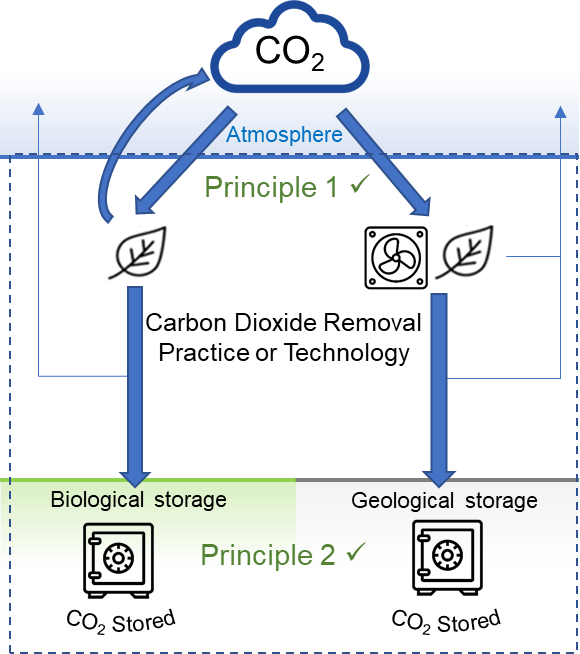
Description: CO2 is removed from the atmosphere; either via photosynthesis or through direct air capture. CO2 is either bound in the biosphere (green storage, to the left), stored in geological formations (grey storage, to the right) or bound in minerals (see Fig. 5) with the intention in all cases to keep it away from the atmosphere as long as possible. These processes are the opposite of CO2 emissions. This illustration shows generic CDR processes. In practice, investigating a CDR system is more complex than the principles illustrated in Fig. 1.
Principle 1 – Yes, the CO2 is removed from the atmosphere.
Principle 2 – Yes, the CO2 is stored in a manner intended to be permanent.
Principle 3 – A cradle-to-grave boundary is required to identify the CO2 and CO2-equivalent that cross the boundary in a CDR system and re-enters the atmosphere. While most of the CO2 is stored in a manner intended to be permanent, some CO2 can return to the atmosphere in the natural carbon cycles, and fractions of CO2 are likely to be released back into the atmosphere during different engineering processing steps.
The amount of CO2 in each stream crossing the boundary needs to be quantified. Greenhouse gases other than CO2 should be recalculated to CO2 equivalent. This graph only shows the carbon flow of captured CO2 of biogenic origin, which leads to CDR when permanently stored.
Principle 4 – If CO2-equivalent emitted minus CO2 removed and stored < (is less than) 0, the process results in CDR.
Figure 2: Bio-CCS applied for energy purposes (BECCS)
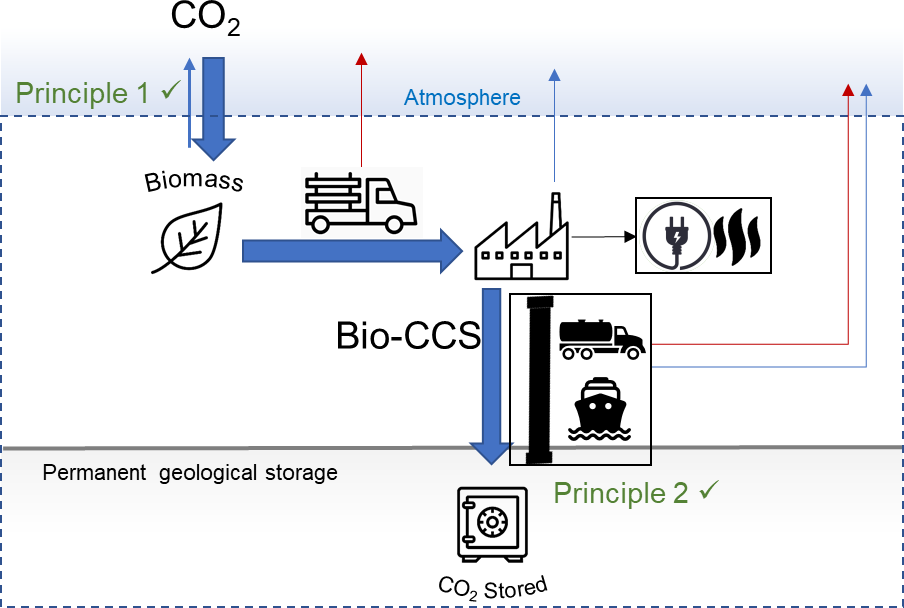
CO2 is removed from the atmosphere by photosynthesis and bound as carbon in biomass. The biomass is combusted to generate heat and power. The carbon released is typically in the form of CO2, which is captured and geologically stored.
Principle 1 – Yes, the CO2 is removed from the atmosphere.
Principle 2 – Yes, the CO2 is placed into geological storage.
Principle 3 – When conducting a cradle-to-grave LCA, the system boundaries are set from the atmosphere to the permanent geological storage. Minor CO2 leakages from the system are likely to occur during the processing and transport of biomass and during the capture and transport of CO2 to the storage site. A CO2 capture rate of 90% has often been applied in CCS projects development. However, increasing the capture rate to 95 or even 99% should only lead to a marginal cost increase10, and therewith decrease the amount of CO2 that leaves the system back to the atmosphere.
Principle 4 – If CO2-equivalent emitted minus CO2 removed and stored < (is less than 0!, the process results in CDR. However, a precautionary approach should be taken, and conservative values should be used in the LCA.
Figure 3: Waste-to-energy: Combined fossil and biogenic feedstock with CCS
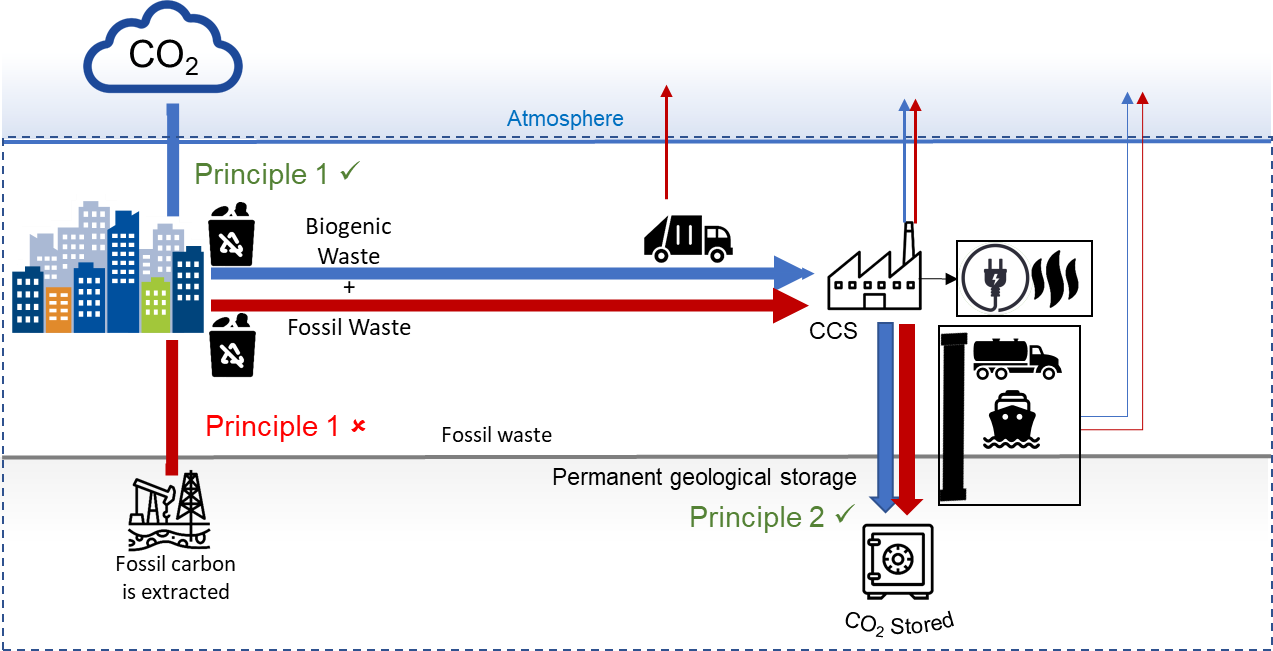
Waste-to-Energy plants burn waste of mixed biogenic and fossil origin generated by human activities to produce heat and/or power. This waste should consist of residual, non-recyclable waste fractions that would otherwise go to landfill11. Applying CCS to a Waste-to-Energy plant means that CO2 will be captured from a flue gas that contains a mixture of fossil and biogenic CO2, for subsequent geological storage. The potential for CDR is directly related to the share of biogenic CO2 in the waste.
Principle 1 – Yes, CO2 is taken from the atmosphere for the biogenic waste.
Principle 1 – No, for waste containing fossil carbon, which generates fossil CO2.
Principle 2 – Yes, the CO2 is geologically stored.
Principle 3 – When using a cradle-to-grave LCA, the system boundaries are set to indicate that carbon enters the system from the atmosphere (biogenic carbon) whereas the extraction of fossil carbon takes place within the system. Carbon is largely stored in permanent geological storage. Minor CO2 leakages from the system are likely to occur during the transport of residual waste to the incineration facility and during the capture and transport of CO2 to the storage site. A CO2 capture rate of 90% has often been applied in CCS project development.
However, increasing the capture rate to 95 or even 99% should only lead to a marginal cost increase10, and therewith decrease the amount of CO2 that leaves the system back to the atmosphere. At this point, it is crucial to stress that all waste should be recycled and reused to the greatest possible extent before the residual fractions are incinerated to recover energy. In LCAs, this residual (non-recyclable) waste is typically considered as having no environmental burden, although further assessment of this may be required.
Principle 4 – If CO2-equivalent emitted minus CO2 removed and stored < (is less than) 0, the process results in CDR. However, a precautionary approach should be taken, and conservative values should be used in the LCA.
It is possible to measure the biogenic and fossil shares of CO2 in flue gases.
Commercially available methods exist for analysing the origin of CO2 in flue gas12,13.
The principle behind the methods is to measure the concentration of the isotope C14 (Carbon-14, 14C), which has a half-life of approximately 5730 years, and adjusting with a factor for C14 concentration in CO2 in air today. Because carbon in flue gases from fossil fuel combustion and limestone calcination have lower concentration of C14 than from biomass combustion, this means that the relative shares of fossil and biogenic CO2 can be measured in the gas.
Figure 4: Direct Air Capture (DAC) for geological CO2 storage
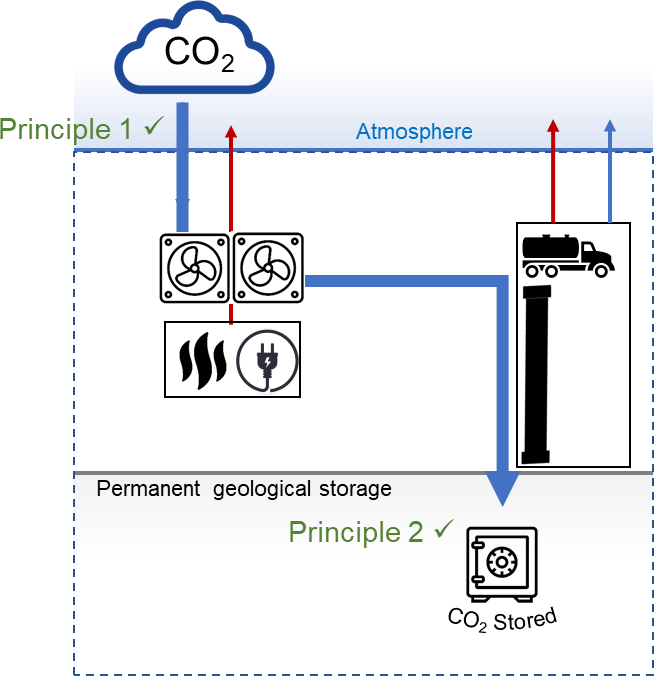
Direct Air Capture units remove CO2 directly from the atmosphere. Fig. 4 illustrates a case where the captured CO2 is processed and geologically stored. DAC units typically require both power and heat to operate, meaning that the CDR potential of DAC directly depends on the carbon intensity of the heat and power used to operate the facility.
Principle 1 – Yes, the CO2 is removed from the atmosphere.
Principle 2 – Yes, the CO2 is placed into geological storage.
Principle 3 – When conducting a cradle-to-grave LCA, the system boundaries are set from the atmosphere to the permanent geological storage. The cradle-to-grave LCA must include any emissions of CO2 due to heat and power generation for operation of the DAC process. Minor CO2 leakages from the system are likely to occur during transport of CO2 to the storage site.
It is expected that the potential for CDR of DAC and geological storage will largely depend on distance from the DAC to the geological storage site and on the potential to use available waste heat and renewable power to drive the DAC units, since it is a highly energy-intensive process.
Principle 4 – If CO2-equivalent emitted minus CO2 removed and stored < (is less than) 0, the process results in CDR. However, a precautionary approach should be taken, and conservative values should be used in the LCA. (Please refer to Chapter 6. Appendix on LCA practices for principle 3)
Figure 5: Example of mineralisation of captured CO2 in long-lived materials
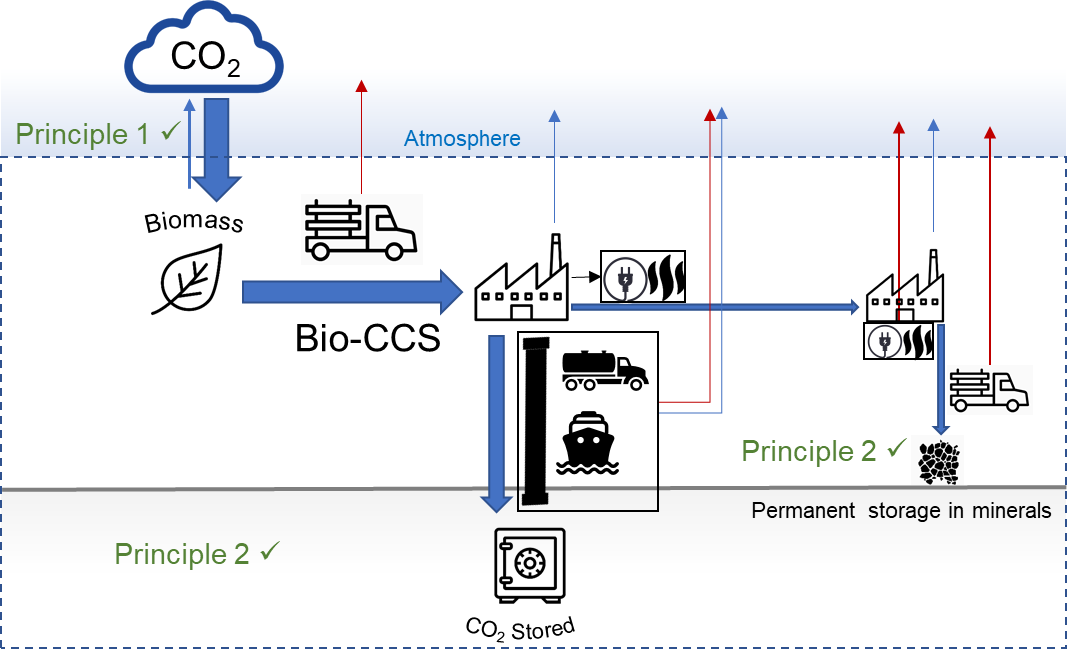 Mineralisation is a CO2 Capture and Use (CCU) pathway that may lead to CDR. Mineralisation is a process where CO2 reacts with non-organic materials to form carbonates. The resulting minerals may have the potential to store CO2 in a manner intended to be permanent and could be used e.g. in construction materials such as aggregates in concrete14. Mineralisation for CDR is illustrated below for the case where a part of the CO2 captured from a bio-energy plant is used in this manner, whereas the rest is stored, as in Fig 2. In principle, the CO2 for mineralisation can also come from DAC.
Principle 1 – Yes, if CO2 is (directly or indirectly) removed from the atmosphere. To achieve CDR, mineralisation should be done with biogenic CO2 or CO2 from Direct Air Capture.
Principle 2 – Yes, CO2 is stored in a manner intended to be permanent in minerals that e.g. can be used in construction works.
Principle 3 – When conducting a cradle-to-grave LCA, the system boundaries are set from the atmosphere to the mineral storage of CO2. Minor CO2 leakages from the system are likely to occur during the processing and transport of biomass. A CO2 capture rate of 90% has often been applied in CCS projects development. Increasing the capture rate to 95 or even 99% should only lead to a marginal cost increase10, and therewith decrease the amount of CO2 that leaves the system back to the atmosphere.
All the CO2 and CO2-equivalent released from the mineralisation process and its energy inputs must be included in the LCA. Furthermore, CO2 emissions from the transport of the end-product minerals to the use site must be taken into account, just as they must be taken into account for CO2 transport to storage. Overall, it can be expected that the
quantities of CO2 leaving the system across the boundary will be minor, but this must be evaluated on a case-to- case basis.
Principle 4 – If CO2- equivalent emitted minus CO2 removed and stored < (is less than) 0, the process results in CDR. However, a precautionary approach should be taken, and conservative values should be used in the LCA.
Figure 6: Production of biofuels with CO2 capture
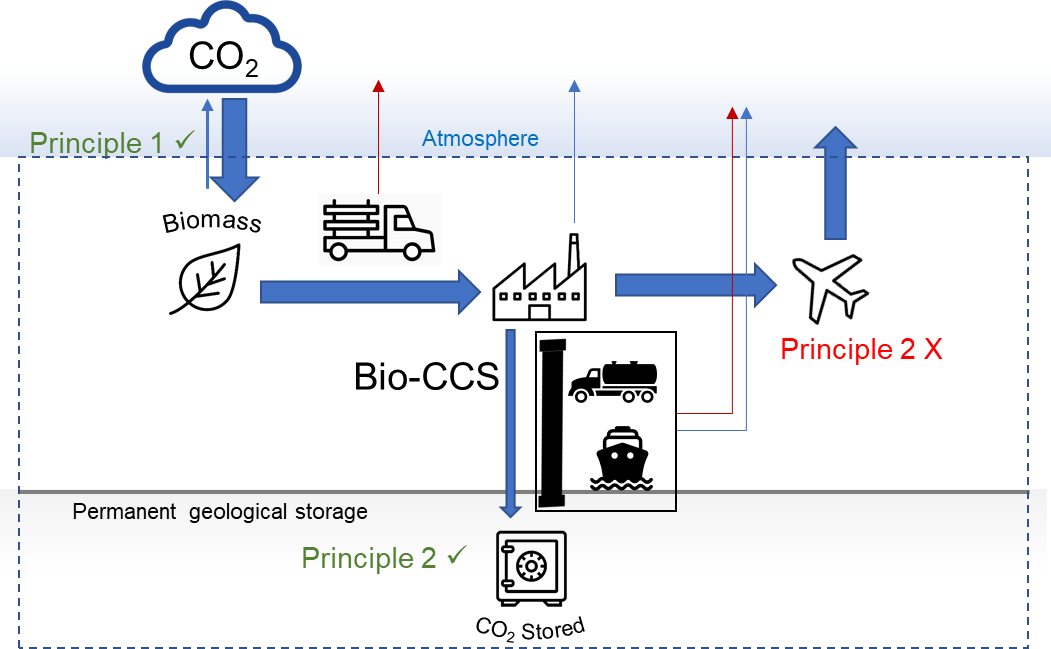
CO2 is removed from the atmosphere by photosynthesis and bound as carbon in biomass. The biomass is largely converted to products for further use, illustrated as liquid biofuel15 for aviation in Fig. 6). CO2 is captured during the production process16 and stored, while the carbon in the biofuel is released again to the atmosphere.
Principle 1 – Yes, CO2 is removed from the atmosphere.
Principle 2 – Yes, CO2 is placed into geological storage for the fuel production process.
Principle 2 – No, the CO2 is re-emitted into the atmosphere when the fuel is burned.
Principle 3 – When conducting a cradle-to-grave LCA, the system boundaries are set from the atmosphere to the permanent geological storage. Minor CO2 leakages from the system are likely to occur during the processing and transport of biomass and during the capture and transport of CO2 to the storage site.
Compared to the process in Fig. 2, only a minor share of the biogenic CO2 is captured and sent to geological storage. The main part of the carbon entering the system is released to the atmosphere as CO2 from combustion. It must be evaluated on a case-to-case basis if the production of bio-fuels qualifies as a CDR process.
Principle 4 – If CO2-equivalent emitted minus CO2 removed and stored < (is less than) 0, the process results in CDR. However, a precautionary approach should be taken, and conservative values should be used in the LCA. (Please refer to Chapter 6. Appendix on LCA practices for principle 3)
Examples of systems not qualifying as CDR
Given that the report uses principle 1-2 as screening criteria, a failure to meet either one of the principles would not result in carbon dioxide removals. The processes analysing by figures 7-10 do not meet principles 1 and 2, therefore they do not qualify as carbon dioxide removals and do not require further assessments.
Figure 7: CO2 emissions resulting from geological reserves and emissions to the atmosphere
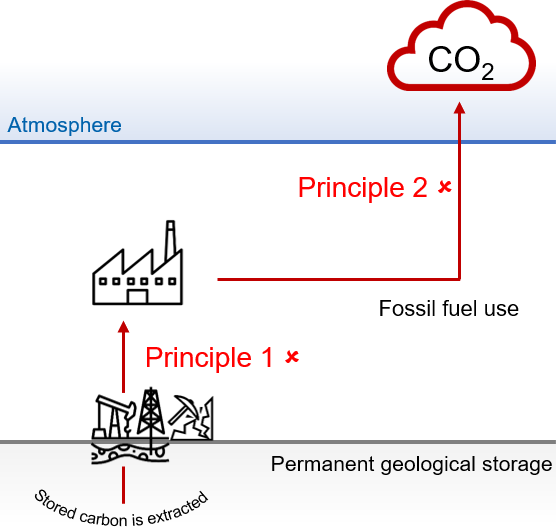
Carbon is extracted from ancient geological reservoirs and combusted, adding CO2 into the atmosphere. This process is the principal cause of climate change. It is the acceleration of this process due to industrialization that has changed the atmospheric composition of greenhouse gases to the extent that we see today.
Principle 1 – No, the CO2 is taken out of geological storage.
Principle 2 – No, the CO2 is emitted into the atmosphere.
Figure 8: Carbon Capture and Storage (CCS) from fossil fuels
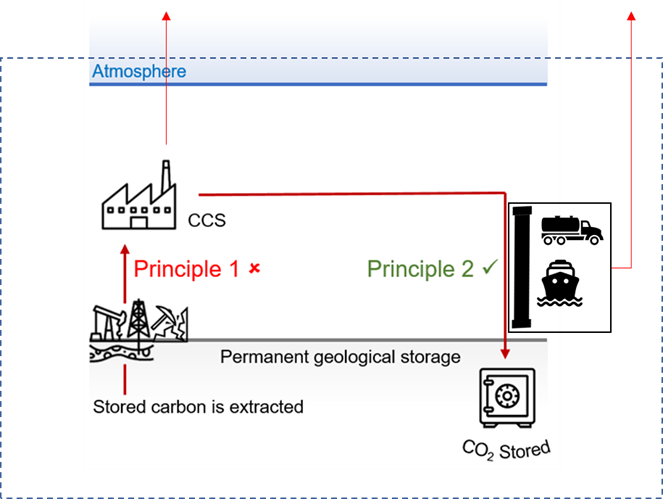
Geological carbon, such as in fossil fuels and limestone, is removed from geological reserves, and used for industrial products, power and/or heat, therewith releasing CO2 which is captured from the flue gas. The captured CO2 is then geologically stored. The process alone cannot result in Carbon Dioxide Removal since no CO2 has been removed from the atmosphere. However, CCS is a crucial technology that can curb CO2 emissions in industrial and power plants and help decarbonise energy-intensive industries in a cost-efficient way.
Principle 1 – No, the CO2 is removed from geological storage.
Principle 2 – Yes, the CO2 is geologically stored.
Figure 9: Direct Air Capture-to- fuels does not have the potential for Carbon Dioxide Removal
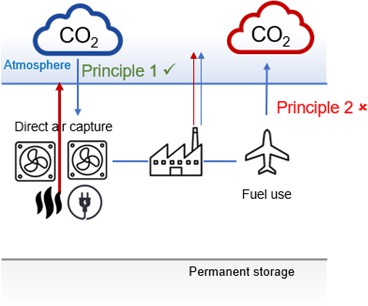
Principle 1 – Yes, CO2 is captured from the atmosphere.
Principle 2 – No, the CO2 is re-emitted into the atmosphere when it is burned as fuel.
CO2 is removed from the atmosphere with Direct Air Capture facilities. The captured CO2 is used to make fuels. The fuel is combusted, releasing the CO2 to the atmosphere. This process does not store CO2.
Figure 10: CO2 Utilisation-to- fuels results in an increase in carbon dioxide in the atmosphere
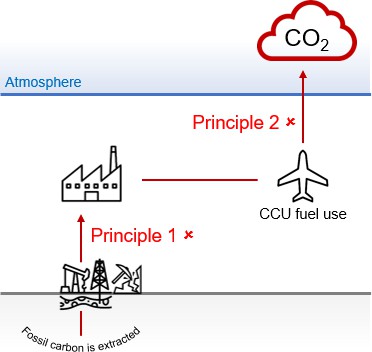
Fossil fuels, containing carbon, are removed from geological storage, and combusted, releasing CO2 which is captured and converted to fuels. The fuels are used, and CO2 is released into the atmosphere. This process does not remove or store CO2, therefore adding CO2 to the atmosphere.
Principle 1 – No, the CO2 is extracted from geological storage.
Principle 2 – No, the CO2 is emitted into the atmosphere.
Figures on nature-based solutions from the report ‘Europe needs a definition of Carbon Dioxide Removal’
Forestry and biochar are two of the nature-based technologies which show potential for CDR. It must be noted that these solutions require active management to ensure that CO2 is prevented from re-entering the atmosphere once it has been removed. It is beyond the scope of this report to go further into detail on reforestation, afforestation and biochar. For these methods of Carbon Dioxide Removal, further assessment according to these principles must be done by the relevant experts. The figures provided hereafter provide an early assessment and only relate to principles 1 and 2.
Figure 11: Forestry
In forestry, the CO2 is removed from the atmosphere by photosynthesis, and the carbon is bound in biomass. The forest is managed in such a way that more carbon is removed than emitted from the atmosphere. For storage of CO2 to be permanent, the forest must remain intact.
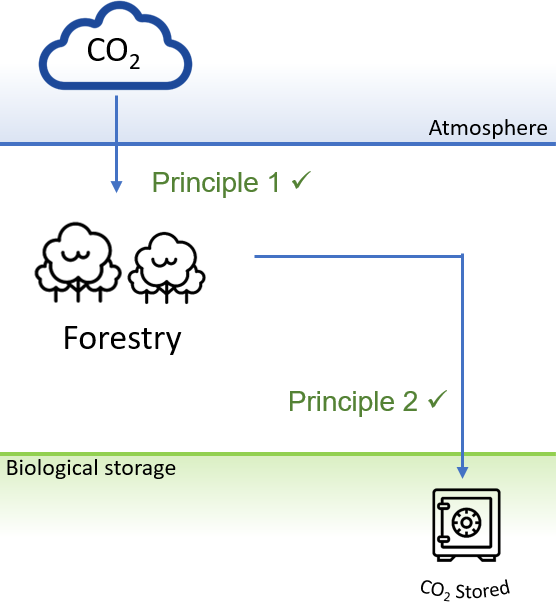
Principle 1 – Yes, the CO2 is removed from the atmosphere.
Principle 2 – Yes, provided the CO2 is bound indefinitely to the biosphere.
Figure 12: Biochar to the soil
In biochar to the soil, CO2 is removed from the atmosphere by photosynthesis and bound as carbon in biomass. The biomass is heated at high temperature without the addition of oxygen, transforming the biogenic carbon into a stable structure (e.g. charcoal). The biochar is then dispersed onto agricultural soils.
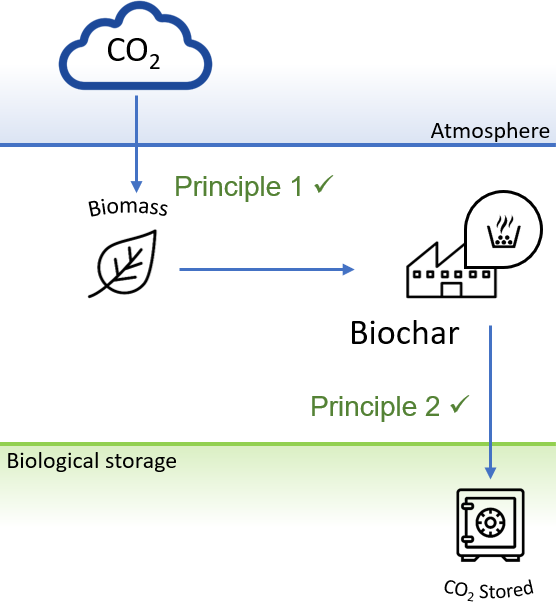
Principle 1 – Yes, the carbon is removed from the atmosphere.
Principle 2 – Yes, provided that the biochar is used for applications that ensure long-term storage away in the biosphere.
The list provided below encompasses a number of projects that meet principles 1 and 2 and therefore have the potential to qualify as carbon dioxide removal. There is a need for robust and transparent carbon accounting when evaluating principles 3 (value chain emissions) and 4 (volumes, therefore scale), as outlined in the chapter “A CDR screening methodology for CCS and CCU projects”.
Proposed or existing CDR projects in Europe
Combined feedstock with CCS –Norcem
Cement production contributes to climate change by combusting fossil and/or biogenic fuels for heat and due to the chemical process of the calcination of the clinker. The main component of clinker is limestone, which is a geological source of carbon.
The Norcem cement plant in Norway has a proposed project that has the potential to achieve Carbon Dioxide Removal in the industry. By adding Carbon Capture and Storage, thereby capturing the process and flue gas CO2 and permanently storing it, emissions can be abated by around 90 to 95%. Subsequently, by replacing fossil fuels with sustainable biomass to generate the necessary heat, the CO2 that is captured will have originated from the atmosphere, leading to physical removal of CO2 from the atmosphere. This process would thereby remove biogenic CO2 and for permanent storage, while producing the essential product that is cement.
In the proposed Longship project, CO2 captured from Norcem will be transported and stored permanently under the seabed in the North Sea with the Northern Lights transport and storage infrastructure.
Combined feedstock with CCS-Klemetsrud Waste-to-Energy
Fortum Oslo Värme (FOV) owns and operates a Waste-to-Energy plant at Klemetsrud in Oslo that burns household and industrial waste that cannot or should not be recycled. The plant processes around 400,000 tonnes of waste per year, with plans to increase capacity, and emits about 450,000 tonnes of CO2 annually.
There is also a significant Bio-CCS (BECCS) potential in the Waste-to-Energy industry, and energy recovery with CO2 capture can thus help achieve carbon dioxide removal. About 50% of the waste incinerated at the Klemetsrud plant in Oslo is of biogenic origin (including food waste, textiles, wood and paper/cardboard), which means that half of the CO2 emissions from the incineration will be part of the natural CO2-cycle. Thus, CO2 capture on energy recovery will in effect remove CO2 from the atmosphere. The plant produces electricity and district heating to buildings in Oslo. Along with sorting and recycling, energy recovery of residual waste is a necessary part of the circular economy that removes unwanted, toxic components from the material cycle and allows resources from the remaining waste to be recycled.
In the proposed Longship project, CO2 captured from Klemetsrud will be transported and stored permanently under the seabed in the North Sea with the Northern Lights transport and storage infrastructure.
Combined feedstock with CCS – Stockholm Exergi
Stockholm Exergi is developing a Bio-CCS project at the Värtan site, as a retrofit to the bio-fuelled KVV8- plant. The Bio-CCS plant will be based on the ‘Hot Potassium Carbonate’ (HPC) technology with a capture-rate of 80-95%. The Bio-CCS facility would result in about 800,000 tonnes of Carbon Dioxide being removed every year. The project is currently in the pre-study phase with forecasted start FEED in Q1/2021 and FID in Q2/2022. The scope for the project is a capture plant, liquefaction and intermediate storage in the harbour area.
In 2019, a test-facility based on the HPC technology was commissioned, with a capacity to capture up to 700 kg CO2/day. The test facility operates on actual flue-gases from the KVV8 unit and the test program focuses mainly on topics related to evaluating kinetic of reactions and degradation of the sorbent. The test program has proven the applicability of the HPC technology and from autumn 2020 it is intended to be re-designed and expanded for continued R&D.
Direct Air Capture and Storage – Climeworks
The direct air capture technology, as an example of CLIMEWORKS, allows to physically capture CO2 from the atmosphere using an adsorption filter. Ambient air is drawn into the direct air capture plant and the carbon dioxide is bound to the filter. When the adsorption filter is saturated with CO2, the filter is heated up to approx. 100°C (using mainly low-grade heat). The CO2 is released and collected as concentrated CO2 gas. CO2-free air is released back to the atmosphere. This continuous cycle is then ready to start again.
In Iceland, the principle of negative CO2emissions has been realised in the EU-funded project “CarbFix2” in the vicinity of one of the world’s largest geothermal power plants. There, CO2 is taken from the atmosphere using Climework’s technology and currently injected into the geothermal source, bounded to water and pumped more than 700 metres underground. There, the CO2 will be mineralised within several years. The heat used to release the CO2 from the filter is provided by the geothermal power plant.
Bioenergy and Carbon Capture and Storage – Drax
In recent years, the Drax Power Station in Yorkshire has undergone a fundamental decarbonisation transition to operate on sustainably sourced biomass wood pellets in place of coal, converting four of its six generation units. The addition of carbon capture and storage to Drax’s biomass units (BECCS) will allow the production of electricity with net-negative emissions.
In February 2019, Drax announced the operation of a BECCS demonstration plant, to capture a tonne of CO2 a day during the pilot phase. This is the first- time carbon dioxide gas has been captured from the combustion of a 100% biomass feedstock anywhere in the world. The project then received
£5 million from the UK government to scale this up to capture 100 tonnes of CO2 per day in Norway which will provide valuable technical data about the scalability of the project.
If scaled up, each one of Drax’s four 660 MW biomass units will be fitted with carbon capture and storage to capture 4MtCO2 per year. Upon completion of this process, the four units will provide 2.4GW of clean ‘firm’ power on the system, whilst capturing 16Mt CO2 per year; creating the world’s first negative emissions power station. Conversion of the first unit could occur as early as 2027 subject to suitable policy frameworks, with the remaining units converting every other year until 2033.
Bioenergy and Carbon Capture, Storage and Use – CO2SERRE
The CO2SERRE project fits in this framework of Carbon Dioxide Removal, in combining carbon storage and bioenergy in an original way, able to promote circular economy. Indeed, CO2SERRE studies the techno-economic feasibility of a pilot implementing “BE-CCUS” in France, in the “Centre- Val de Loire” Region. Carbon would be captured from a biomass plant in Orléans and stored in local deep saline aquifers, leading to negative emissions. Besides, a fraction of captured CO2 would be valorised in greenhouse crops for plants growth boosting. In absence of other incentives, using a fraction of CO2 in greenhouses could help building a business case. Only the captured CO2 aimed for storage would qualify as CDR.
Started in October 2019 for a 3-years duration, the CO2SERRE project is coordinated by BRGM and involves the University of Orléans (Laboratoire d’Economie), the AgreenTech Valley, the CVETMO, Cristal Union and Dalkia Biomasse Orléans. The project is granted by the French Region “Centre-Val de Loire”. Long term, CO2SERRE seeks to promote the development of a carbon network in the region with platforms gathering regional emitters and a mutualised transport to the storage reservoir.
Appendix on LCA practices for principle 3
In general, for LCAs, the question arises which system boundaries to use. Four basic boundaries can be distinguished, and these are given here from the lowest to the highest level:
- Gate-to-gate: the direct uptakes and direct emissions of GHG within the ‘gates’ of the process are accounted for.
- Cradle-to-gate: an expansion of the first system with all the upstream processes needed to operate the processes.
- Cradle-to-grave: the cradle-to-gate system is expanded with the end-of-life stage of the product, including transport the CO2 to the place of use or permanent storage, the decommissioning of the process installations, and, in the case of CCU, the use and end of life of the final product.
- Cradle-to-grave with ILUC: a further expansion at the cradle side related to indirect land use change (ILUC) is included. ILUC is a consequence of taking existing silvicultural or agricultural land into use for (other) biomass production.
The LCA should follow the ISO standards on life cycle assessment (ISO 14040, 14044) and ISO 14067 on the carbon footprints of products17.
Another important aspect of LCA is the concept of allocation. Allocation can be needed in case a process yields more than a single product18.
In most cases, not all inputs and outputs (emissions, waste) can be included in the system under study. In that case, cut-off criteria for initial inclusion of inputs and outputs are needed. Cut-off criteria can be based on the mass of inputs and outputs, e.g. 99% of the total mass or total energy demand is accounted for. Another relevant criterion, in the case of CDR, is that, e.g. 99% of all GHG emissions expressed in CO2-equivalents are accounted for.